
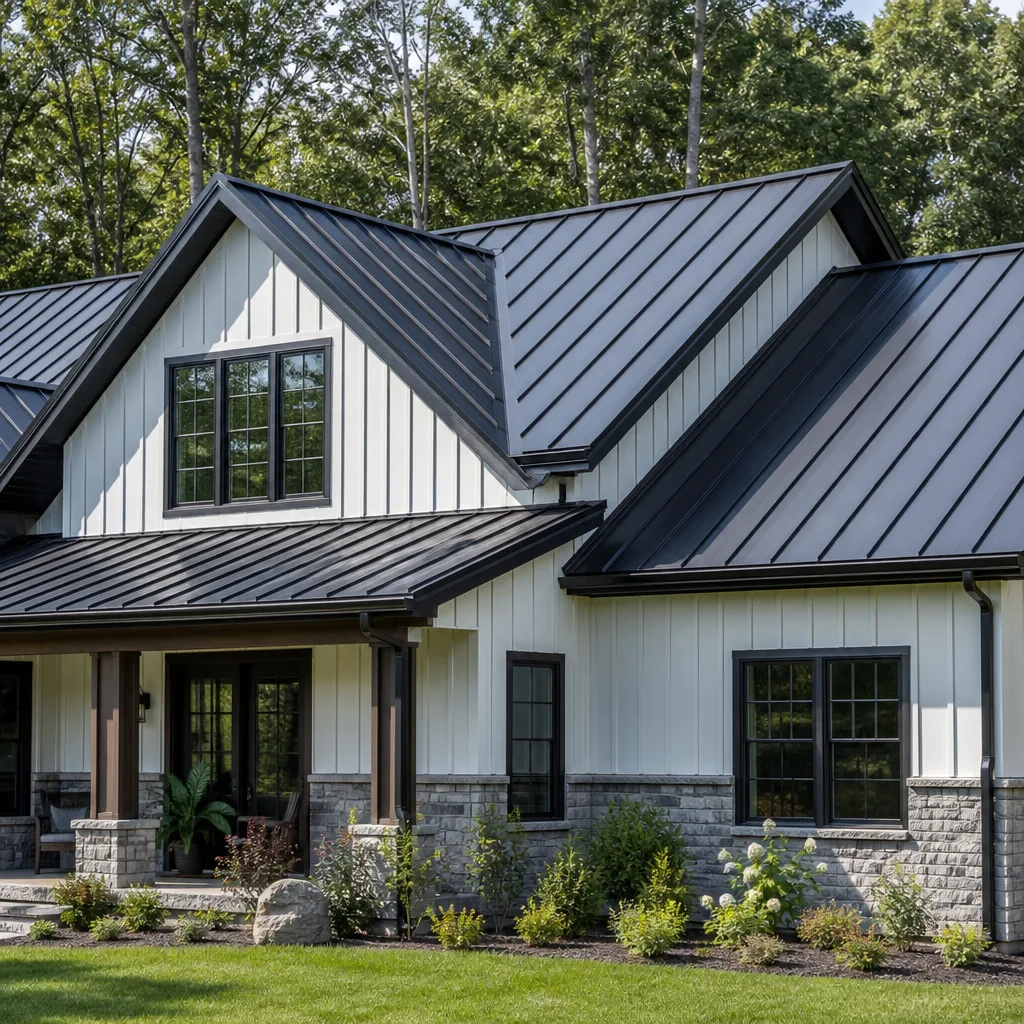
 Metal roofing
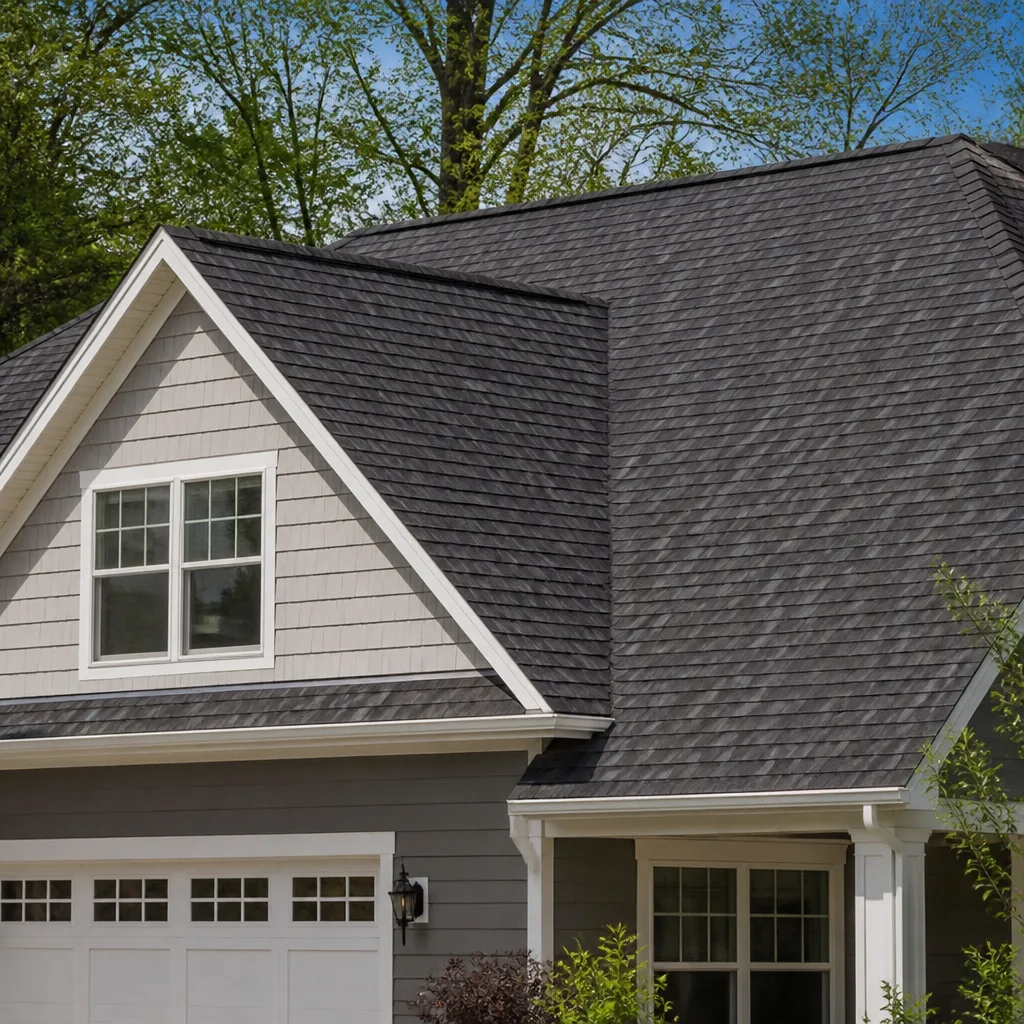 Architectural shingles
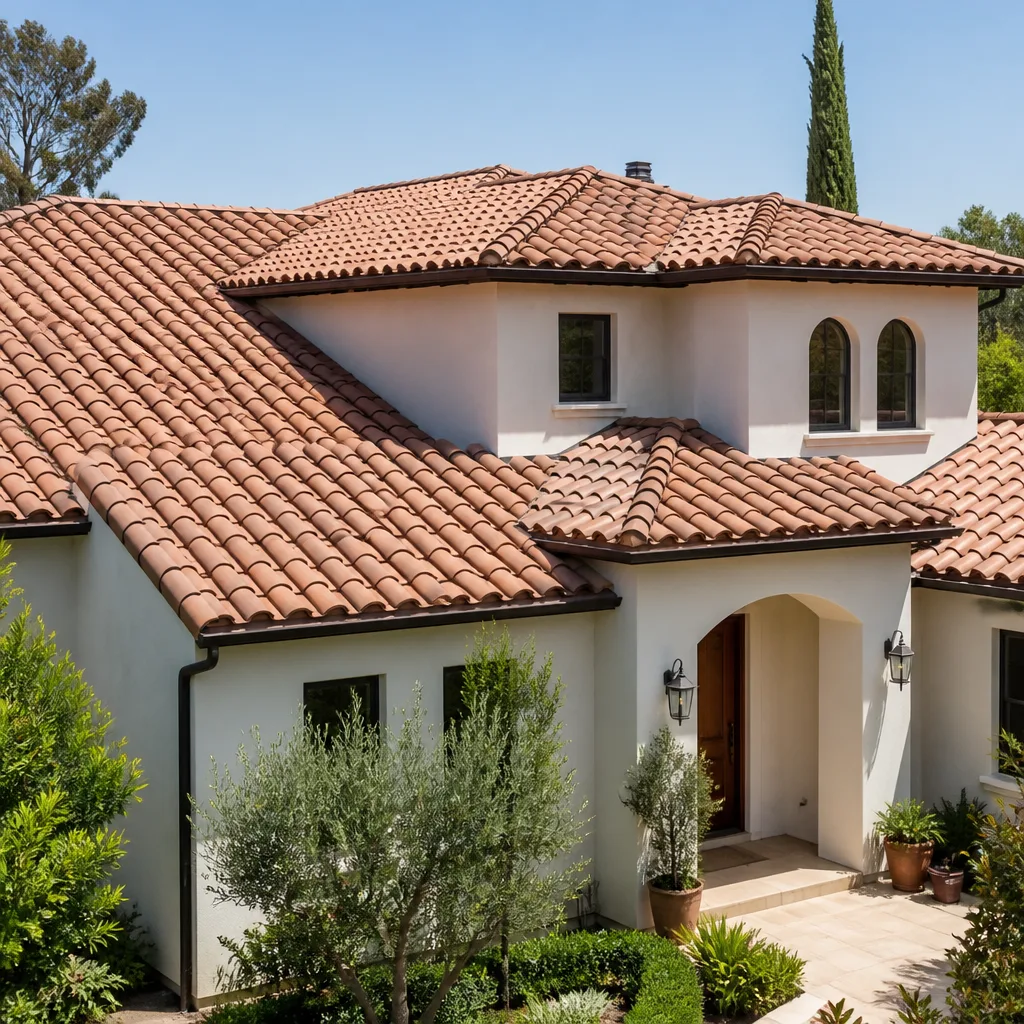 Tile roofing
 GAF
GAF Owens Corning
 Flat & low-slope
Free roof inspection with deck photos before we talk money - GAF and Owens Corning certified installation
Boral Ridge Vent Installation: The Miami Owner’s Guide
Boral ridge vent installation on a Miami home typically runs $850 to $1,600 installed, depending on linear footage, roof pitch, and whether the existing vent needs a full tear-off. We stock Boral-compatible ridge vent material on our trucks and can usually complete the swap in a single visit. Most Miami homeowners discover the problem after a ceiling stain appears near an interior wall, or when their attic temperature climbs 20-plus degrees above what it was last summer. The ridge vent is the exhaust half of your roof’s breathing system, and when it fails, the whole attic pays for it.
The part itself is a molded profile that runs along the peak of the roof, letting hot air escape while keeping wind-driven rain out. Boral’s version has a lower profile than some competitors and uses a specific filter matrix that resists the salt and humidity we deal with here. We are an independent service provider, not affiliated with Boral. But we’ve installed enough of their ridge vents to know exactly what fails first and what a proper replacement looks like in a South Florida climate.
Which Boral Models This Applies To
Boral manufactures two main ridge vent profiles you’ll see on Miami roofs. The first is the Boral Ridge Vent Standard, typically sold in 4-foot sections, with a 9-inch profile width and a filter mesh designed for standard, non-cyclonic wind zones. The second is the Boral Ridge Vent High-Wind, which uses a denser internal baffle and is rated for Miami-Dade and Broward wind-load requirements. If your home is in an HVHZ (High Velocity Hurricane Zone), which covers most of Miami proper, you need the High-Wind version, not the Standard. This is the single most common compatibility mistake we see from handymen and even some roofing crews that don’t work South Florida regularly.
Identifying your specific part is straightforward. The Boral vent sections have a molded logo and a product code printed inside the end cap on most units. If the logo has worn off, measure the profile width across the top. If it’s about 9 inches, it’s the standard unit. If it’s closer to 11 inches, you likely have the high-wind profile. The vent connects to your ridge board with 1.25-inch roofing nails and is topped with a cap shingle to match your field shingles. We stock both Boral profiles, along with aftermarket equivalents from GAF, Owens Corning, and CertainTeed for homeowners who prefer a brand-matched detail.
One more thing: Boral discontinued or updated some of its accessory sizing in 2023, so an older Boral vent from a 2018-era roof might not match the current section dimensions exactly. We carry a transition flashing kit specifically to bridge older Boral profiles to current stock, which avoids replacing the full ridge line over a two-inch spec difference.
Styles & brands we work with
Signs Your Boral Ridge Vent Installation Is Failing
- Dark streaks on ceiling drywall near interior walls. This is usually ridge vent water intrusion, not a plumbing leak. When the filter matrix deteriorates or the cap shingle lifts, wind-driven Miami rain gets pushed into the attic through the vent opening. The water tracks down the rafters and shows up as streaking near the wall line, not the center of the room.
- Attic temperature spikes on sunny days. A properly functioning ridge vent pulls hot air out as it rises. If your attic hits 140 degrees on an 80-degree day, the vent is likely blocked or collapsed. We use an infrared thermometer to confirm, but you’ll feel the difference yourself when you pop the attic hatch.
- Visible sagging or waviness along the ridge line from the street. The Boral vent section itself doesn’t sag unless the ridge board or truss has movement, but the cap shingle over it can ripple when the filter matrix degrades and loses its shape. This is most visible in the morning light along the peak.
- Shingle granules collecting in the gutters near the roof peak. That’s not just normal wear. When the ridge vent cap shingle fails, the exposed edges degrade faster than the field shingles, and the granules wash down. It’s an early warning that the vent system is nearing the end of its useful life.
- Musty smell from attic access or unexplained humidity in the home. A failed ridge vent traps moisture. In Miami’s humidity, that becomes mildew fast. If you notice the smell, check the vent before you call a mold remediation company.
See the difference
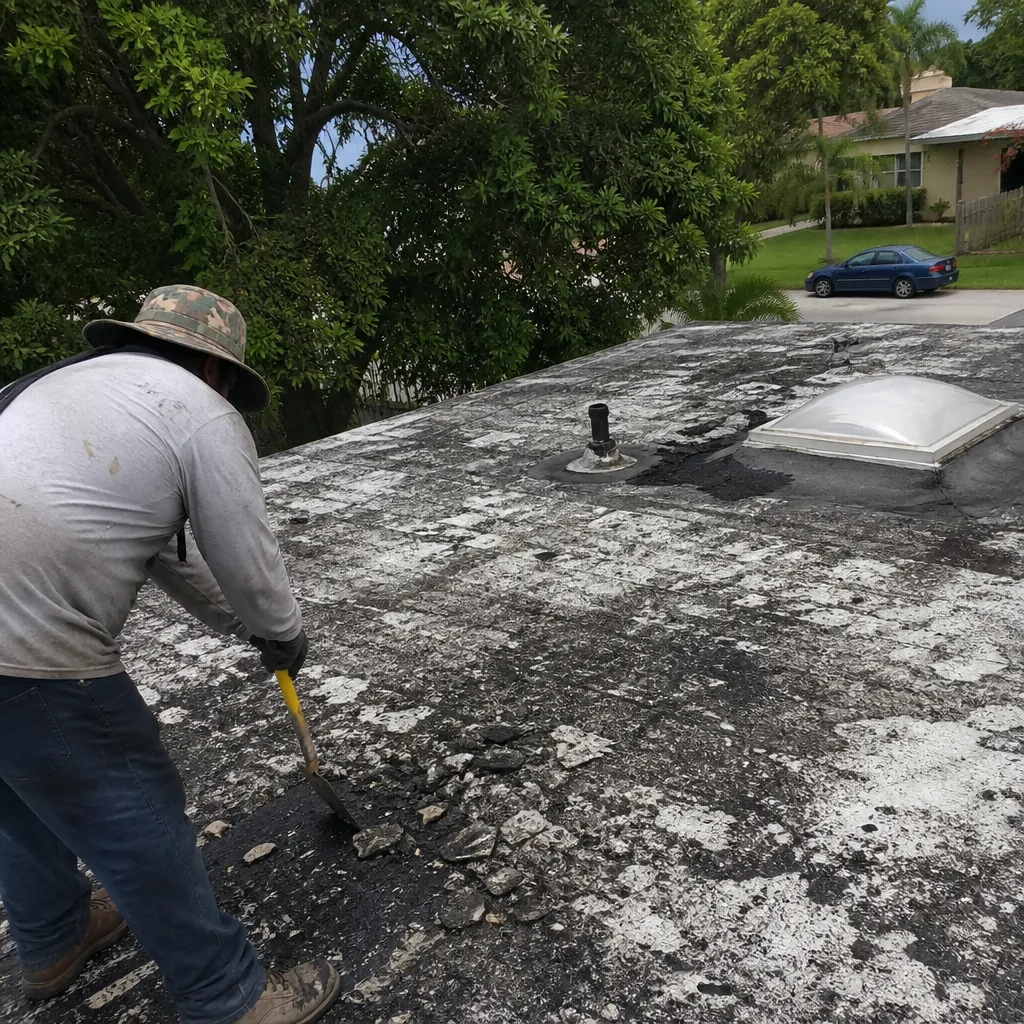 Before
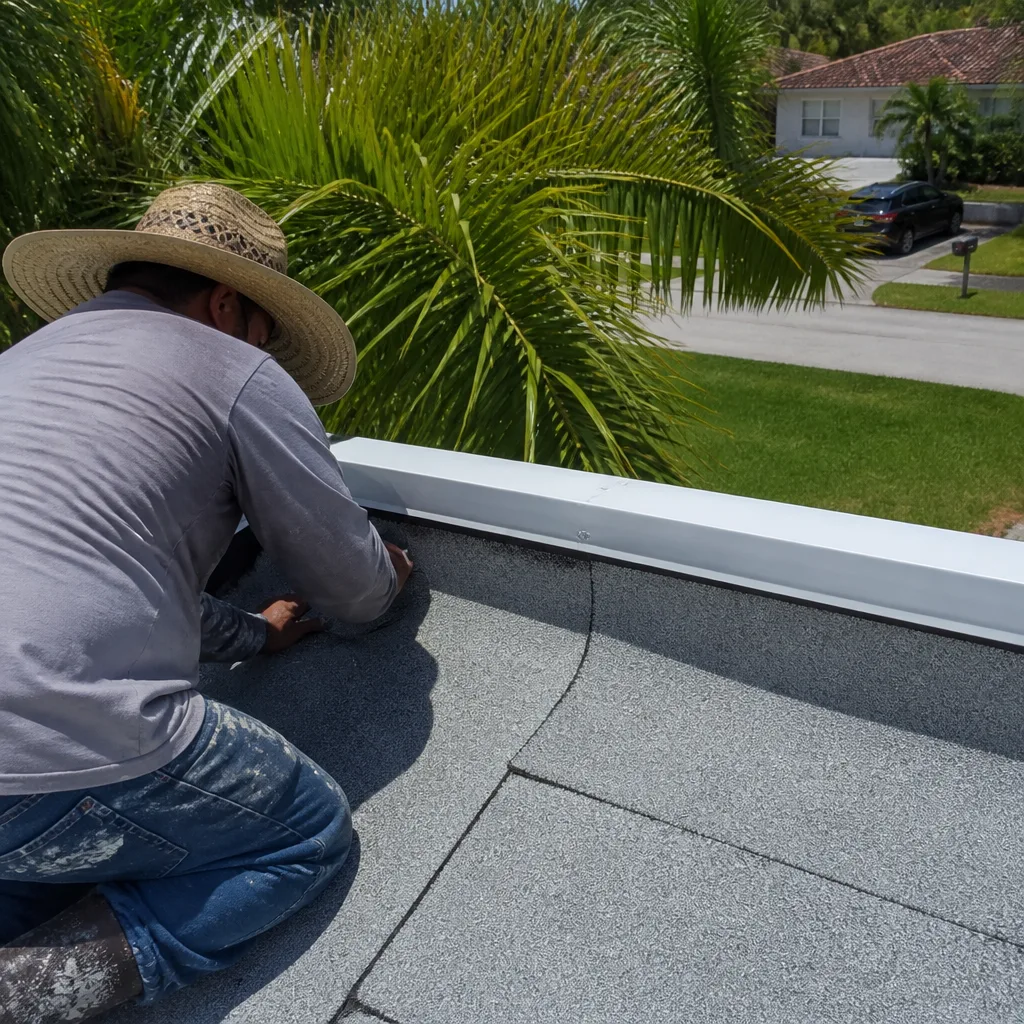 After
After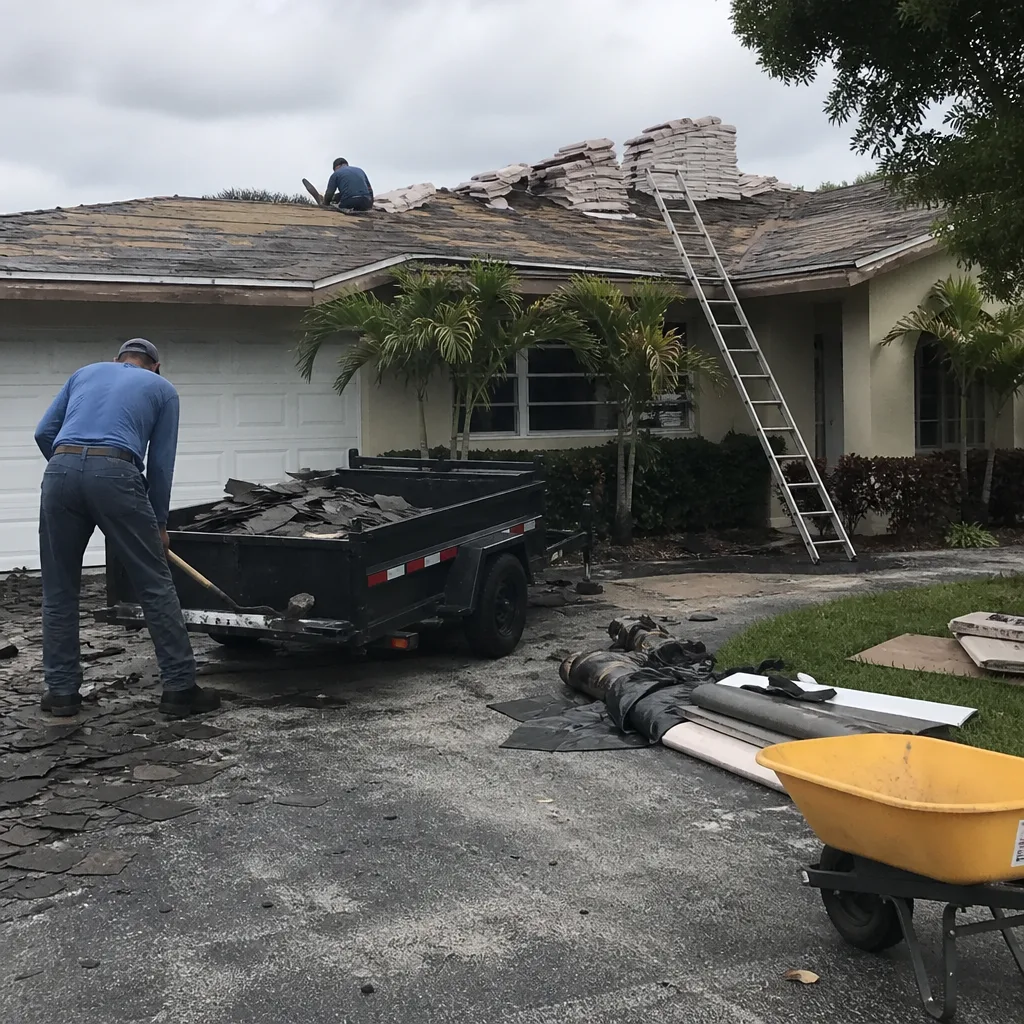 Before
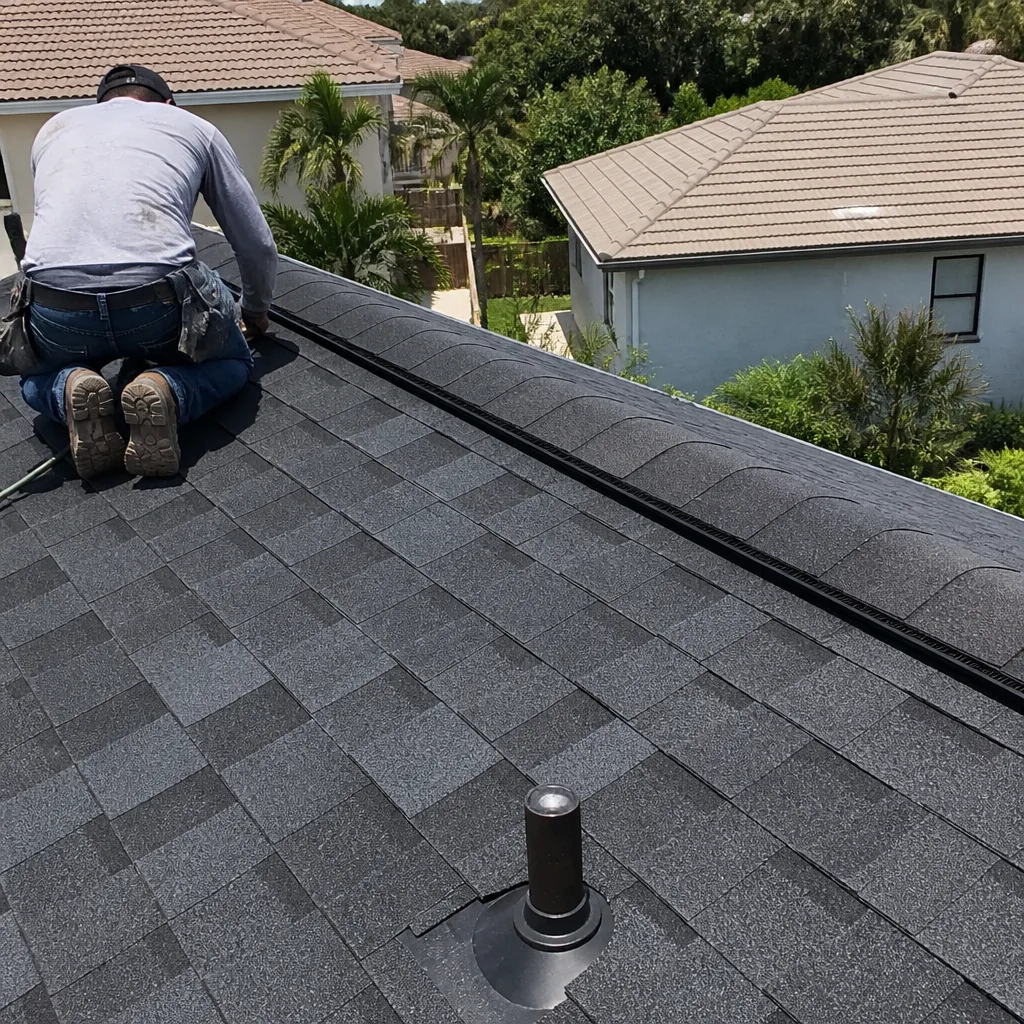 After
After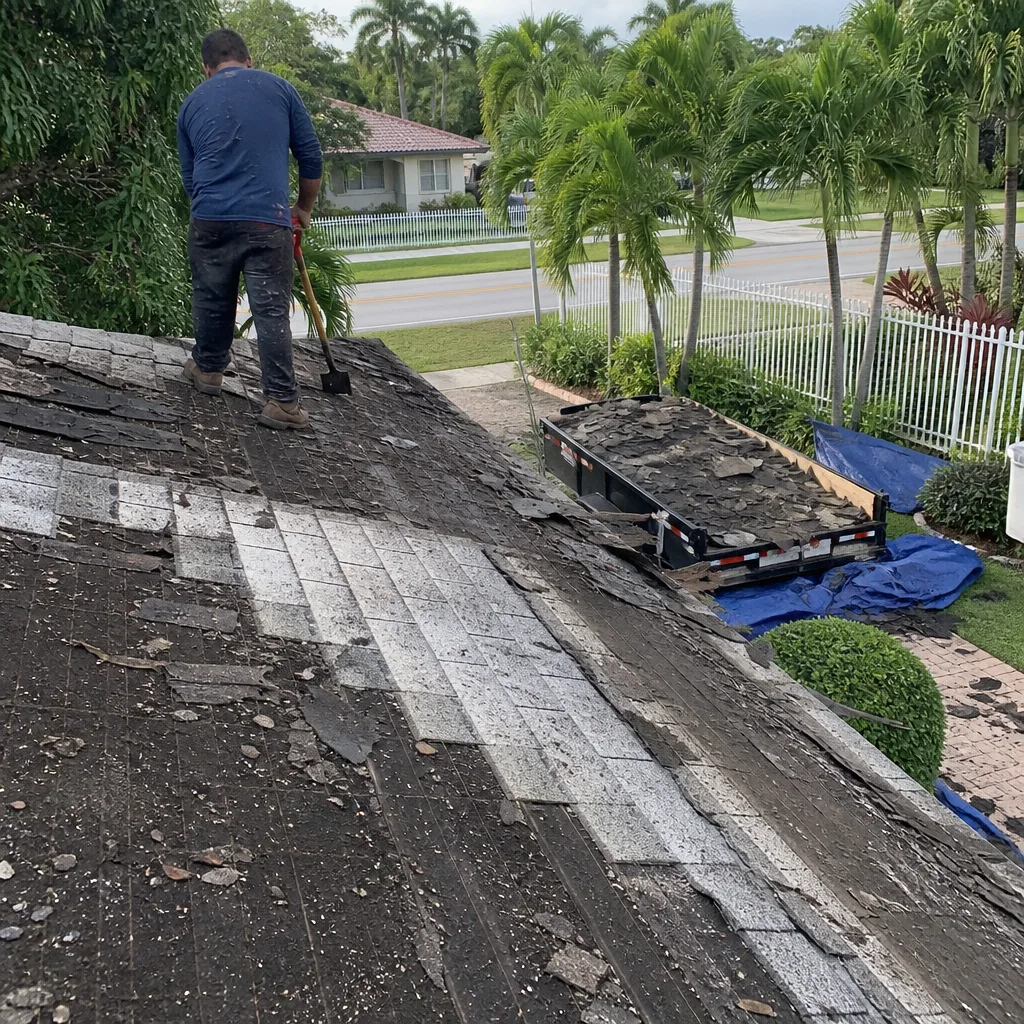 Before
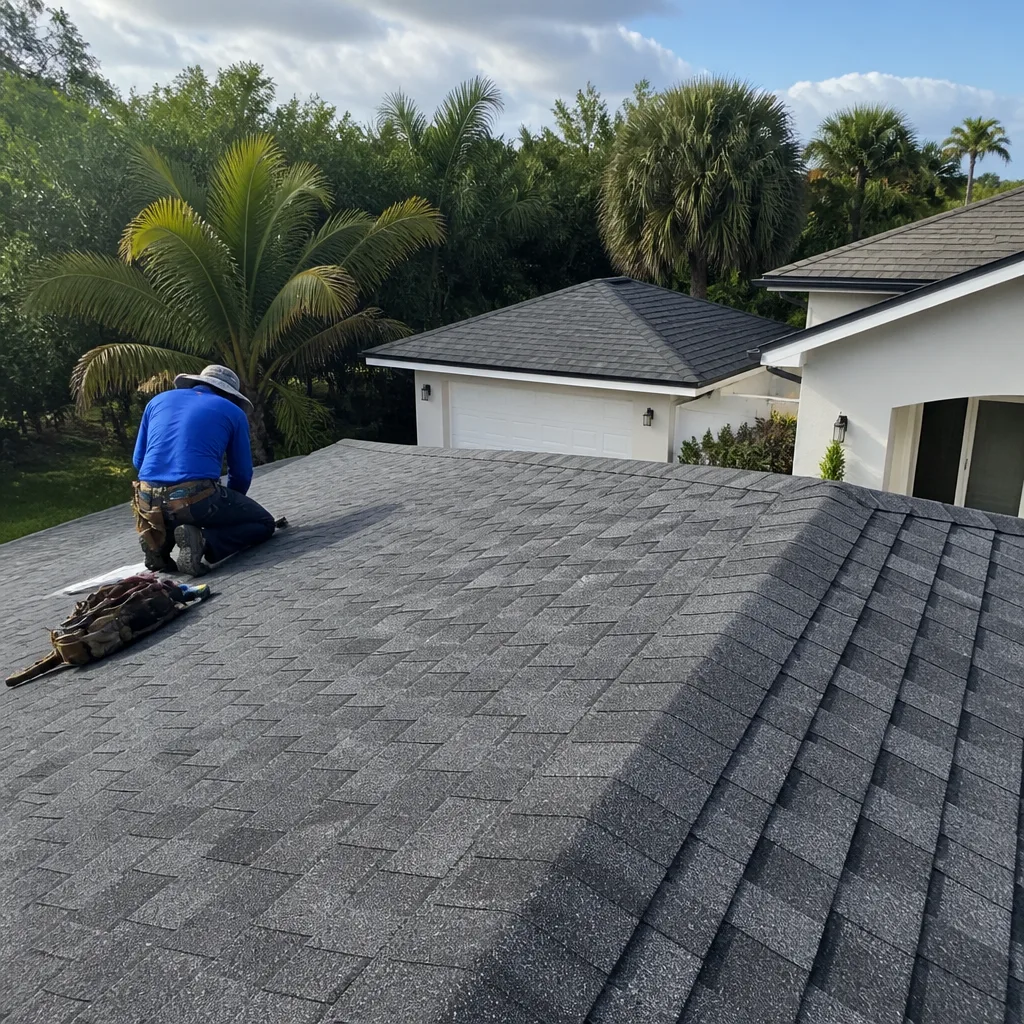 After
AfterReplacement Cost & What’s Included
In the Miami market, full Boral ridge vent replacement runs $850 to $1,600 installed for most single-family homes. That includes removal of the old vent sections and cap shingles, inspection of the ridge opening, new Boral ridge vent (either OEM or aftermarket equivalent, your choice), new cap shingles, and fasteners. If the roof decking at the ridge is rotted or water-damaged, expect an additional $6 to $9 per square foot for plywood replacement in the affected area, though that’s usually limited to a few feet on each side of the vent when caught early.
The biggest cost driver is whether the existing cap shingles can be reused. On a newer roof with matching shingle stock, we can sometimes lift and reset the caps, which saves material cost. On an older roof or discontinued shingle color, we install new caps in a close match or a contrasting architectural detail. Every quote from our team includes a written price before any work starts. The number on the page is the number on the invoice. Every replacement is covered by the 365-Day Done Right Promise: if the repair fails within 365 days, we fix it at no charge, and we make a free second visit to do it.
DIY or Call Us?
The honest split is this: you can visually inspect your Boral ridge vent from the ground or from a ladder, but you should not walk the ridge line without proper fall protection, and you should not attempt a sectional replacement on a Miami summer afternoon. Roof surfaces run 30 degrees hotter than the air temperature, and ridge work puts you at the steepest, highest point of the roof. Falls from ridge lines are one of the most common serious injuries among homeowners attempting their own roof repairs. It’s not worth the hospital bill or the workers’ comp claim you’ll wish you had.
What you can safely do is check the attic side: look for daylight at the ridge opening, check for water staining on the rafters near the vent, and measure the vent opening if you can reach it safely from the attic floor. If you want to confirm compatibility before calling, measure the profile width from the top. Then call (850) 318-3769 and we’ll bring the right section to match. Most replacements take three to four hours from setup to cleanup, and you’ll get before-and-after photos along with a digital invoice sent to your phone.
FAQs
A Boral ridge vent installed with new cap shingles typically lasts 12 to 18 years in the Miami climate, which is three to five years less than the same vent in a drier market like Phoenix or inland California. The UV exposure and salt air here break down the polymer matrix faster than manufacturers’ climatized test data suggests. If your vent is past year 12 and you’re seeing signs of failure, replacement now is cheaper than repairing water damage later. Call (850) 318-3769 for an exact quote on your home.
Yes, a single 4-foot section can often be replaced without touching the rest of the ridge line. That’s a $200 to $400 repair in most cases. The exception is when the failure is caused by a deteriorated filter matrix that runs the full length of the ridge, which the older Boral units sometimes exhibit. We’ll tell you which situation you have before quoting anything.
A standard Boral ridge vent replacement on a single-story Miami home takes 3 to 4 hours from setup to cleanup. Two-story homes or complex roof geometries may run 5 to 6 hours. You’ll have a live trackable arrival time, so you know when our technician pulls up, and photo documentation of the old vent, the new vent, and the finished work before you pay the invoice.
We stock both Boral vent profiles and compatible aftermarket options on our service vehicles, which means we don’t need to schedule a second visit to install parts we had to order. If your home requires a transition flashing for an older Boral profile, we carry that too. Call (850) 318-3769 and we can usually have the job done this week.
When your Boral ridge vent installation fails, the fix is a single afternoon. Our crew has been working Miami roofs since Dylan Pace first brought his trade school fundamentals to the city, including the Brickell corridor where salt air and hurricane wind demands write their own building spec. Every job gets a written price before work starts, a live arrival time, photo proof of the work, and a 365-day warranty in writing. Every promise in writing, because a roof shouldn’t come with fine print.
Call (850) 318-3769 to schedule your free estimate for Boral ridge vent installation in Miami.
Written by Dylan Pace, Owner, Crestview Roofing Co Miami at Crestview Roofing Co Miami, serving Miami and nearby areas.