
Last updated October 17, 2026
 Metal roofing
 Architectural shingles
 Tile roofing
 GAF
GAF Owens Corning
 Flat & low-slope
Free roof inspection with deck photos before we talk money - GAF and Owens Corning certified installation
Seasonal Roofing Care for Miami: Year-Round Homeowner’s Guide
Here’s the uncomfortable truth most Miami homeowners learn the hard way: your roof ages in dog years. Between the salt air, the July sun that can push rooftop temperatures past 160 degrees, and the afternoon thunderstorms that show up like clockwork from May to October, a Miami roof endures in one year what a roof in Ohio might take four years to experience. The good news is that the damage follows a predictable calendar. We’ve spent 25 years watching how Miami’s two real seasons (the dry season and the wet season) wear down roofing systems, and we know exactly what to check, when to check it, and what it costs to fix problems before they turn into water in your living room. This guide gives you a month-by-month maintenance calendar built specifically for Miami’s climate, covering what needs to happen before April, what to do during the storm months, and why the work you do after hurricane season matters. For more guides & resources, visit our blog.ne season matters just as much as what you do before it.
Styles & brands we work with
Quick Answer
In Miami, the single most important roof maintenance window runs from January through March, when dry weather allows adhesives and sealants to cure properly and roofing crews are actually available. Schedule a professional inspection in early January, complete all repairs before April 1, then do a post-storm-season inspection in November to catch the slow leaks that show up weeks after storms pass. Budget roughly $250 – $450 annually for inspections and minor maintenance, and keep a dated photo log of your roof’s condition every season to protect insurance claims and warranty coverage.
Table of Contents
- Why Miami’s Two Seasons Change How You Maintain a Roof
- January Through March: Miami’s Real Roof Repair Window
- April Through June: Beating the First Storms
- July Through September: Surviving Hurricane Peak
- October and November: The Post-Storm Inspection Most People Skip
- December: The Maintenance Month That Protects Your Warranty
- The Miami Roof Maintenance Calendar: January Through December
- Building an Annual Photo Log for Insurance and Warranty Claims
- Common Mistakes to Avoid
- When to Call a Professional
- Frequently Asked Questions
- The Bottom Line
Why Miami’s Two Seasons Change How You Maintain a Roof
Forget spring, summer, fall, and winter. Miami operates on a completely different clock. We have the dry season, which runs roughly November through April, and the wet season, which dominates from May through October. Within those two blocks, the transitional months (late April and late October) do most of the real damage to roofing materials. Here’s why that matters for maintenance: the dry season is when adhesives, sealants, and coatings can actually cure. Products like roof cement, flashing sealant, and acrylic coatings need dry conditions and temperatures above 50 degrees to bond properly. In Miami’s wet months, even a small morning shower can ruin a fresh sealant application. That’s not a preference; it’s chemistry. A tube of roofing cement applied in July has a meaningful chance of failing within weeks because humidity interrupts the curing process. We’ve seen homeowners pay for summer repairs only to have the same leak return in September. The material didn’t fail. The timing did.
Then there’s the UV factor. Miami’s UV index regularly hits 11-plus in summer, which is classified as extreme. That intensity breaks down the petroleum-based compounds in roofing adhesives, asphalt shingles, and rubber pipe boots at a rate that national product warranties simply don’t account for. A shingle rated for 30 years in temperate climates might give you 18 to 22 in Miami’s sun. A pipe boot that would last a decade in Virginia can crack and split in six years here. The practical takeaway: inspect more often than the manufacturer’s warranty language suggests, and schedule inspections around Miami’s climate calendar, not the four-season framework most national guides assume. That’s also why we recommend an inspection cadence of twice per year for Miami homes: once in early January and once in early November. Two inspections catch the full cycle of storm stress and sun damage. One inspection a year, typically done in spring, misses the post-hurricane damage that shows up in October and November.
January Through March: Miami’s Real Roof Repair Window
Here’s the counterintuitive advice that sets The Complete Guide to Roofing in Miami apart: the optimal window to fix a Miami roof is January through March. Most homeowners don’t think about their roof until it leaks in July, and by then every roofer in Miami-Dade County is running two weeks behind. But in January, February, and March, the weather is dry, temperatures are moderate, and roofing materials cure properly. Labor is more available, which means better scheduling flexibility and often better pricing. And critically, any repair you complete by the end of March has four full months to settle before hurricane season opens on June 1.
What should you actually do during this window? Here’s the priority list, and it’s not glamorous:
- Schedule a professional inspection in early January. A proper Miami roof inspection covers the shingle or tile surface, flashing around chimneys, vents, and skylights, the pipe boots around plumbing vents, the drip edge, and the attic side of the roof deck. Expect to pay $150 – $350 in Miami for a thorough inspection from a licensed roofer. If a company offers it for free, ask what the inspection actually covers; a drive-by photo session is not an inspection.
- Replace cracked or sun-baked pipe boots. This is the most common failure point on Miami roofs. Rubber pipe boots crack under constant UV exposure, and water follows the pipe straight down into your ceiling. A pipe boot replacement typically runs $180 – $350 in Miami, depending on roof pitch and access.
- Re-seal flashing around chimneys, vents, and skylights. Flashing, the metal strips that seal joints around roof penetrations, shifts over time. Miami’s thermal expansion cycle (hot days followed by cooler nights) causes the sealant at flashing edges to crack. Re-sealing standard penetrations costs $150 – $400 per penetration in Miami, depending on size and condition.
- Clear all debris from valleys and gutters. Miami’s winter winds drop leaves, palm fronds, and random debris into roof valleys. Blocked valleys send water sideways under shingles instead of down the roof. A clean valley is the cheapest leak prevention you can buy.
- Check for signs of prior hail or wind damage. Winter storms in Miami occasionally bring hail, especially in the western parts of the county. Look for circular dents in shingles, granule loss in gutters, and displaced tiles. Document everything with photos.
Completing this list before April 1 does more than protect your home. It protects your warranty. Most asphalt shingle manufacturers, including the major brands we install like GAF and Tamko, require homeowners to maintain their roofs per the manufacturer’s care guidelines. If a warranty claim arises and the manufacturer determines you skipped basic maintenance (like clearing debris or repairing flashing), they can deny the claim entirely. The dry-season work you complete in January, February, and March is the evidence trail that keeps those warranties viable.
April Through June: Beating the First Storms
Late April is the transitional month in Miami. The dry season is technically ending, and the first afternoon thunderstorms start rolling in from the Everglades. This is when any dry-season repair that didn’t get done starts to matter. If you sealed your flashing in February, you’re fine. If you put it off, the first strong storm of May will find every crack and gap on your roof.
The pre-hurricane-season checklist is different from the January maintenance list. Before June 1, focus on structural preparedness rather than routine maintenance:
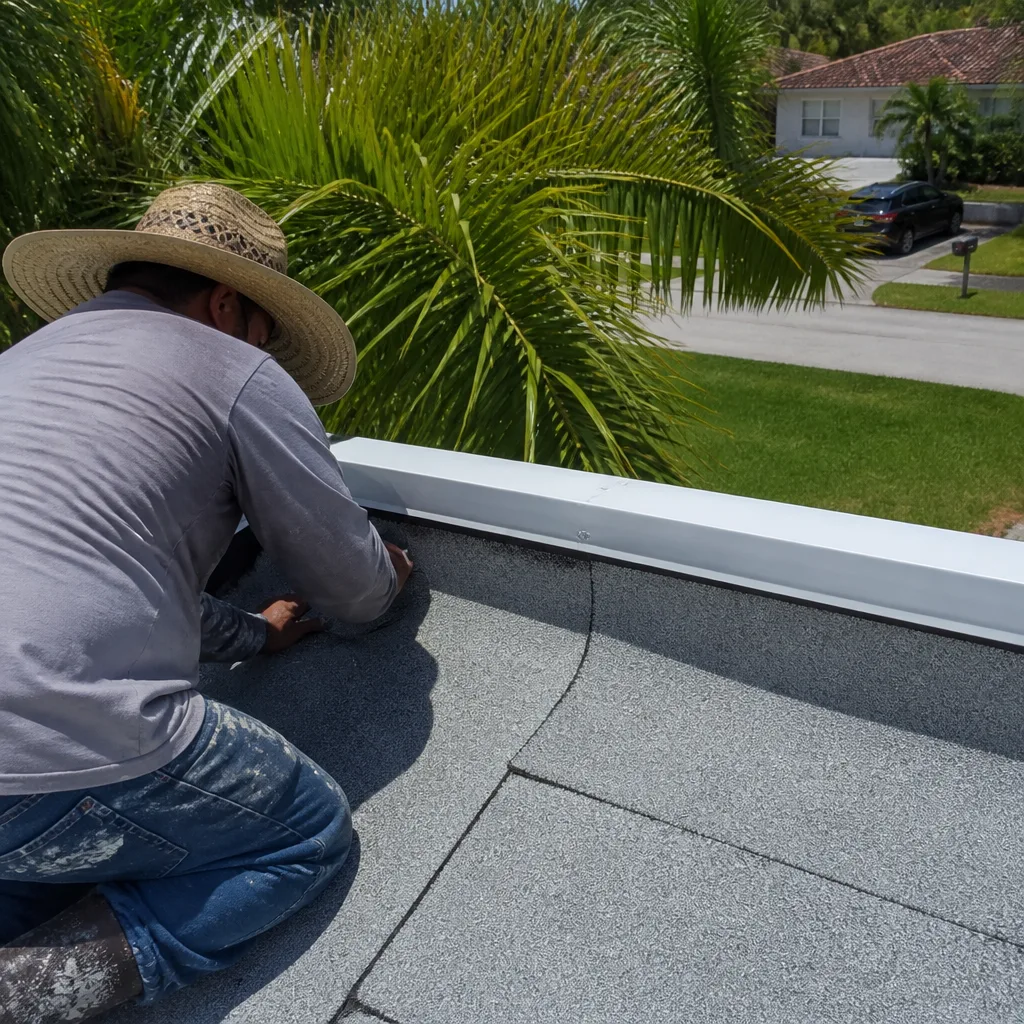
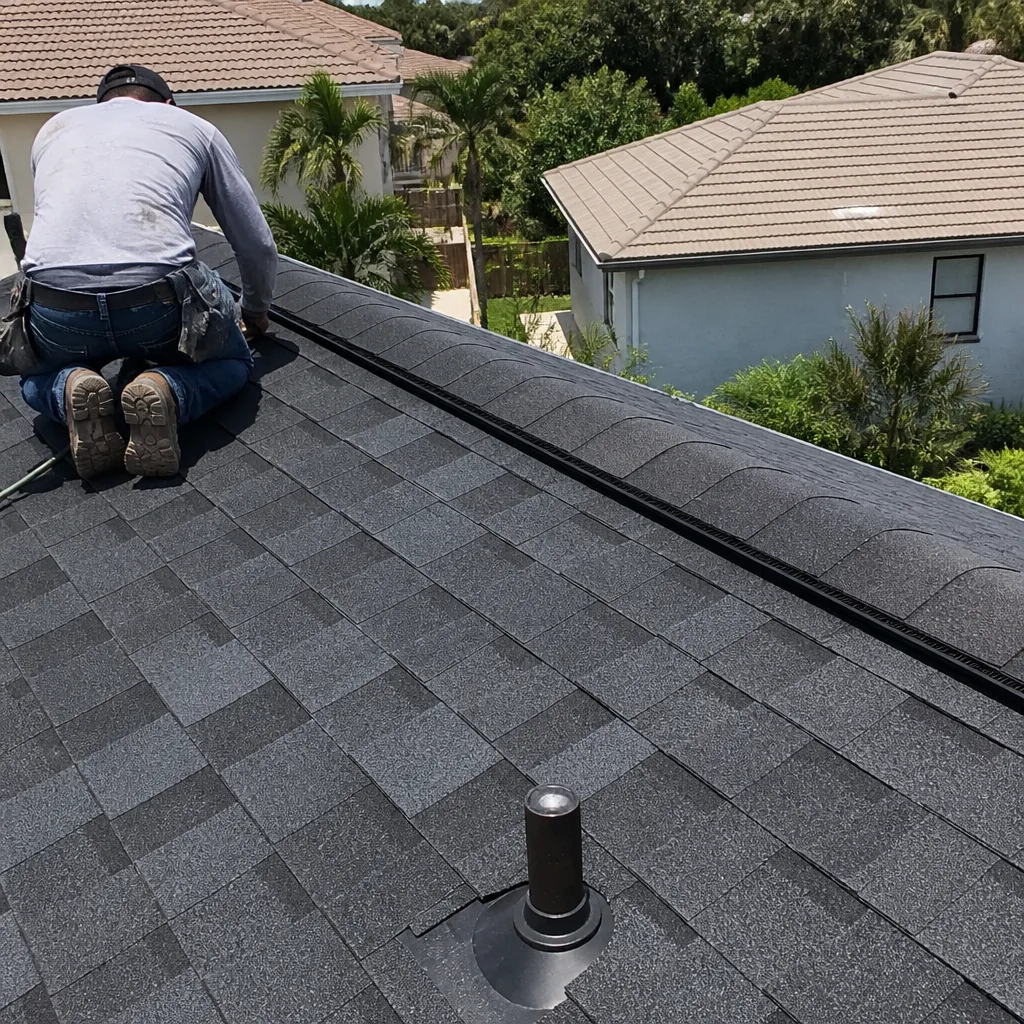
- Verify that parapet caps and ridge vents are secure. Miami’s strongest winds come with hurricane bands, and loose roof accessories become projectiles. A loose ridge vent can peel back and open a gap along the entire peak of the roof.
- Check for cracked or slipping tiles on tile roofs. Tile roofs are common throughout Miami, and they have a specific failure pattern: hairline cracks from foot traffic or impact, and tiles that slide out of position when the underlayment degrades. A tile roof inspection before June is non-negotiable.
- Trim overhanging branches. A palm frond swinging in 60 mph winds acts like a whip against shingles. Anything within six feet of the roof should be cut back.
- Confirm the roof’s drainage path is clear. Flat and low-slope roofs, common on mid-century Miami homes, need clear scuppers and drains. Standing water on a flat roof degrades the membrane far faster than the sun does.
- Photograph the entire roof surface. This is the baseline for your annual photo log, which we cover in detail below. If you have visible damage before hurricane season, document it before making claims later.
One Miami-specific note: the summer thunderstorms that arrive in late May and June are short but violent. They dump an inch of rain in 20 minutes, which tests drainage far more intensely than a steady all-day rain. A roof that handles a slow rain fine can overflow its drainage path under Miami’s downpour intensity. That’s why clear valleys, scuppers, and gutters matter more here than in most cities.
July Through September: Surviving Hurricane Peak
The wet season is in full force, and this is the stretch where Miami roofs show their true condition. Hurricane season runs June through November, but the historical peak for South Florida landfalls is mid-August through mid-October. You cannot safely do significant roof repair during this window. What you can do is monitor, document, and respond quickly to problems as they appear.
For July through September, the maintenance philosophy shifts from prevention to monitoring:
- Check the attic after every major storm. This is the most underused leak-detection tool in Miami. Within 24 hours of a heavy rain, go into your attic with a flashlight and look for water staining on the underside of the roof deck, wet insulation, or drips around penetrations. Catching a leak at the attic stage means a $300 repair. Catching it at the ceiling stage means a $3,000 drywall and paint job.
- Watch for granule accumulation in gutters. Asphalt shingles shed granules as they age, but a sudden jump in granule loss after a storm signals impact damage or adhesive failure. If your gutters look like they’re filling with black sand after every rain, your shingles are deteriorating on an accelerated timeline.
- Document wind-driven rain events. Miami’s summer storms often push rain horizontally. Wind-driven rain finds entry points that normal rain never touches: under the drip edge, around window flashing, through gable vents. If you see water intrusion during a wind-driven storm, note the wind direction. That information helps a roofer pinpoint the source faster.
- Resist the urge to “just patch it.” When a small leak appears in August, the temptation is to slap some sealant on it and wait for the dry season. That’s often a mistake. Moisture trapped under a patch accelerates deck rot. If you’re patching during the wet season, use a temporary roof cement and plan for a proper repair in the dry months. Better yet, call a roofer who can at least diagnose the exact failure point so you’re not guessing.
One more Miami reality: summer is also when roofing crews are most in demand. If your roof is clearly failing, you may wait weeks for a repair. That’s another reason the January-to-March window is so important: the homeowners who did their repairs early are not the ones waiting three weeks in August.
October and November: The Post-Storm Inspection Most People Skip
November is the stepchild of the Miami roofing calendar. Everyone talks about pre-hurricane-season prep, but the post-season inspection is equally important, and here’s why: storm stress shows up as slow leaks weeks after the storm passes. A shingle that lifted during a September squall may not let water through until October, when another rain finds the gap. A flashing joint that shifted under wind pressure may leak only when the wind blows from a specific direction. The damage is invisible until conditions align, and by November, conditions have aligned at least once.
The post-hurricane-season inspection should focus on different things than the January maintenance inspection:
- Look for lifted, creased, or displaced shingles. Wind can lift shingles without tearing them off. Once lifted, the adhesive seal is broken, and the shingle will never re-seal properly. It becomes a permanent leak risk.
- Check every flashing point for movement. Flashing shifts in high winds. Look for gaps between flashing and the wall or chimney surface. Even a quarter-inch gap lets water in during wind-driven rain.
- Inspect the ridge line and hip caps. These are the highest points of the roof, and they take the brunt of hurricane-force gusts. Missing or cracked ridge caps are the most common storm damage we see in Miami.
- Examine the drip edge along eaves and rakes. Wind gets under the drip edge and pries it loose. A bent drip edge may not be visible from the ground, so this requires ladder access or a professional inspection.
- Photograph everything. Your November photo log entry is the most important one of the year. It documents storm damage before the next season starts, which matters if you need to file an insurance claim later.
The timing here matters. In Miami, late October and November bring the last of the seasonal rains, but the dry season hasn’t locked in yet. Scheduling your post-storm inspection in early November gives you enough time to complete any repairs before the calendar turns to January, when the cycle starts again. If you skip the November inspection, storm damage sits dormant through the dry season, and you may not discover it until the first heavy rain of next May, when the water damage is worse and the repair queue is longer.
December: The Maintenance Month That Protects Your Warranty
December is Miami’s quietest month for roofing. The storm season is winding down, the holidays are here, and nobody is thinking about their roof. That’s exactly why December is the best month for the maintenance tasks that don’t require a professional:
- Clean your gutters and downspouts one final time. Miami’s fall leaf drop (such as it is) happens in November and early December. Clear gutters before the January inspection, so the inspector can actually see what’s happening at the roof edge.
- Update your photo log with end-of-year photos. The December photos become the annual reference point. Compare them to last December’s photos to spot year-over-year changes.
- Review your insurance policy and warranty documents. Most homeowners never read their policy until they need to file a claim. December is the month to check your coverage limits, your hurricane deductible, and whether your warranty requires a specific inspection schedule. Some manufacturer warranties for Miami roofs with Atlas or Boral tile systems require annual professional inspections to remain valid. Know your obligations before the new year starts.
- Schedule your January inspection. The best Miami roofing companies book out in January. If you call in early December, you can schedule a January inspection and lock in priority before the new year’s flood of calls.
December is also a good time for honest budget planning. If your roof is 12 to 15 years old with asphalt shingles, or 20-plus years with tile, you should start planning for replacement costs. Miami roof replacement pricing typically runs $8,500 – $18,000 for a standard single-family home, depending on material and roof complexity. Knowing that number a year in advance is far better than discovering it during an emergency.
The Miami Roof Maintenance Calendar: January Through December
Here’s the complete month-by-month calendar, extracted from the sections above. Print it, save it, or screenshot it. This is the reference tool that replaces vague “check your roof in spring” advice with Miami-specific timing.
- January: Schedule and complete a professional roof inspection. Replace cracked pipe boots and re-seal flashing. Complete any dry-season repairs before the end of the month if possible.
- February: Complete remaining repairs from the January inspection. Verify that all adhesives and sealants have cured properly. Clear debris from valleys and low points.
- March: Final dry-season repair window. Confirm all manufacturer-recommended maintenance is complete before month’s end. Update your photo log with pre-summer baseline photos.
- April: Trim overhanging branches. Clear all drainage paths, scuppers, and gutters. Complete hurricane-season prep checklist. Second photo log entry.
- May: Check the attic after the first heavy thunderstorms. Watch for water staining around penetrations. Document any wind-driven rain intrusion.
- June: Verify hurricane preparedness: secure ridge vents, parapet caps, and loose tiles. Confirm the roof’s drainage path is completely clear. Pre-storm photo log entry.
- July: Monitor attic after every major storm. Check gutters for granule accumulation. Respond quickly to any leak indicators; do not wait for the dry season to diagnose.
- August: Peak hurricane awareness. Document all storm events, including wind direction and rain intensity. Check for lifted shingles after each storm passes.
- September: Continued storm monitoring. Inspect ridge caps and hip caps after high-wind events. Note any shingle creasing or lifting for the November repair list.
- October: Begin watching for post-storm slow leaks. Check attic for water intrusion after late-season rains. Schedule post-season inspection for early November.
- November: Complete post-hurricane-season professional inspection. Repair storm-stressed flashing, lifted shingles, and damaged ridge caps. Update photo log.
- December: Clean gutters and downspouts. Review insurance policy and warranty documents. Update annual photo log. Schedule January inspection before the new year rush.
The January-to-March window cannot be overstated. In our experience working across Miami’s residential roofing market, the homeowners who follow this calendar spend roughly 40% less on roofing over a 10-year period than homeowners who respond to problems as they appear. The math is simple: a $300 flashing repair in February beats a $2,800 ceiling repair in September every single time.
Building an Annual Photo Log for Insurance and Warranty Claims
The most valuable tool a Miami homeowner can have in a roof dispute is a dated photo log. Insurance companies deny claims when homeowners cannot prove the damage happened during the covered period. Warranty providers deny claims when homeowners cannot prove they maintained the roof. A consistent photo log solves both problems, and it takes about 15 minutes per season.
Here’s how to build one that actually works:
- Photograph from the same angles every time. Use four standard positions: each corner of the house, plus one shot straight down the ridge line if accessible. Consistency makes year-over-year comparison possible.
- Include close-ups of problem areas. If the roofer flagged a specific spot (a cracked pipe boot, a re-sealed flashing joint), photograph that exact spot every season. You’re creating a visual record of whether the repair is holding.
- Timestamp everything. Your phone does this automatically, but also rename the files with the date or save them to a dated folder. The timestamps are what give the log evidentiary value.
- Store the photos in the cloud. A photo log on a dead phone doesn’t help you. Use Google Photos, iCloud, or Dropbox, and save photos to a dedicated folder you won’t accidentally delete.
- Add a short note for anything unusual. A photo of granules in the gutter means more if you note that it rained heavily the night before. Two sentences per entry is plenty.
By the end of two years, you’ll have eight seasonal photo entries showing the full arc of your roof’s condition. When a hurricane hits and you file a claim, you have pre-storm baseline photos. When a manufacturer questions whether you maintained the roof, you have the visual evidence. When a contractor’s repair fails, you have the before-and-after documentation. This simple habit is worth more than any extended warranty you’ll ever buy.
And it’s worth noting here: Crestview Roofing’s approach to documentation works on the same principle. Every job we complete includes before-and-after photo documentation as part of The Relay Standard, so you receive a visual record of exactly what was done. Your own photo log complements that record and gives you a complete maintenance history for the roof’s entire life.
Common Mistakes to Avoid
- Waiting until a leak appears to think about the roof. By the time water reaches your ceiling, the damage has been happening for weeks or months inside the attic and roof deck. A visible leak is a late-stage symptom, not an early warning.
- Using silicone caulk on flashing joints. Silicone and roofing don’t mix well. Roofing cement or specialized flashing sealant bonds properly to metal and shingle surfaces. Silicone peels off within a season in Miami’s humidity.
- Ignoring the attic as a diagnostic tool. Your attic tells you what your roof is doing long before the ceiling does. Skipping attic checks means losing months of advance warning.
- Applying sealants during the rainy season. Roof cements and coatings need dry conditions to cure. A July sealant job has a high chance of failing within weeks. Plan sealing work for the dry months.
- Treating a tile roof like a shingle roof. Tile roofs fail differently than asphalt shingle roofs. Walking on cracked tiles makes the damage worse. If you have tile, get a roofer who specializes in tile systems, not a generalist.
- Assuming a new roof means no maintenance. Even new roofing systems need seasonal inspection. Miami’s environment is aggressive enough that a new roof’s flashing can fail within five years if ignored.
- Filing an insurance claim without documentation. Claims without evidence get lowballed or denied. The photo log is your leverage. Skip it, and you’re negotiating with one hand tied.
When to Call a Professional
Some roof tasks are safe and smart for homeowners; others are not. If you’re comfortable on a ladder and the roof is low-pitch, gutter cleaning and basic visual inspections are reasonable DIY tasks. But the moment you’re dealing with water intrusion, damaged flashing, lifted shingles, or any repair that requires sealants and adhesives, call a professional. Roof sealants are chemistry, and the wrong product or a poorly prepared surface means the repair fails, usually at the worst possible moment, which in Miami is the middle of a July thunderstorm. And if your roof involves high-pitch surfaces, tile, or any work near the edge, the fall risk is not worth the savings. A trained roofer with proper safety equipment makes it look easy because they’re trained. You are not. Crestview Roofing Co Miami offers free estimates in Miami, and we’ll give you a written price before any work begins, so you know the exact scope and cost before you commit. Call (850) 318-3769 to schedule a seasonal inspection or a specific repair estimate. We also cover everything from roof repair in Miami to full roof installation in Miami, and you can learn more about our work at the Crestview Roofing Co Miami home page.
Frequently Asked Questions
Twice a year: once in January or February for routine maintenance and pre-summer assurance, and once in November to catch post-hurricane-season damage from the storms you’ve already forgotten about. Call (850) 318-3769 to schedule either inspection with a written estimate before any work starts.
Routine seasonal maintenance typically costs $250 – $450 per visit in Miami when no significant repairs are needed, covering the inspection, minor re-sealing, and debris clearing. Larger repairs like pipe boot replacement or extensive flashing re-sealing add $180 – $400 per item. For an exact quote, call (850) 318-3769 for a free estimate.
January through March is the best window for roof replacement in Miami. The dry weather lets materials cure properly, labor is more available than during the busy storm season, and you have four months of buffer before hurricane season. That holds true whether you’re pricing a standard asphalt shingle job or a tile roof.
Miami’s UV index reaches extreme levels throughout the summer, which accelerates the breakdown of adhesives, pipe boots, and coatings. A 30-year shingle may last closer to 20 years here, and rubber components often fail within six to eight years. That’s why twice-yearly inspections make sense in Miami even if you’d inspect once a year elsewhere.
Yes. Storm damage frequently hides in the attic as slow water intrusion that never shows up from the street. Lifted shingles, shifting flashing, and ridge damage from high winds are invisible from the ground but become leak sources within weeks or months. Call (850) 318-3769 to schedule a post-season inspection; we document everything with photos.
Insurance does not cover routine maintenance; it covers sudden damage from covered events like storms or fire. Manufacturer warranties often require maintenance as a condition of coverage, and some Miami systems from brands like Boral or Atlas require annual inspections. Our roof repair work in Miami includes documentation that supports warranty claims. For all work, we put the price in writing before we start.
The Bottom Line
Miami roofs fail on a schedule, and that schedule is dictated by two seasons: the wet and the dry. The homeowners who understand this and act on it, who inspect in January, prepare in April, monitor through the summer, and inspect again in November, spend less over the life of their roof than the homeowners who only respond when water appears. The core tasks are simple: inspect twice a year, complete dry-season repairs before April 1, pay attention to the attic, and document everything with photos. If you need a starting point, learn How to Hire a Roofing Contractor in Miami: A Step-by-Step Guide, then schedule your January inspection before the calendar fills up and get your maintenance cycle on track. Call (850) 318-3769 and we’ll get you on the schedule with a written price before any work begins.
Written by Dylan Pace, Owner at Crestview Roofing Co Miami, serving Miami since 2000.
See the difference
 Before
 After
After Before
 After
After Before
 After
After