
Last updated October 17, 2026
 Metal roofing
 Architectural shingles
 Tile roofing
 GAF
GAF Owens Corning
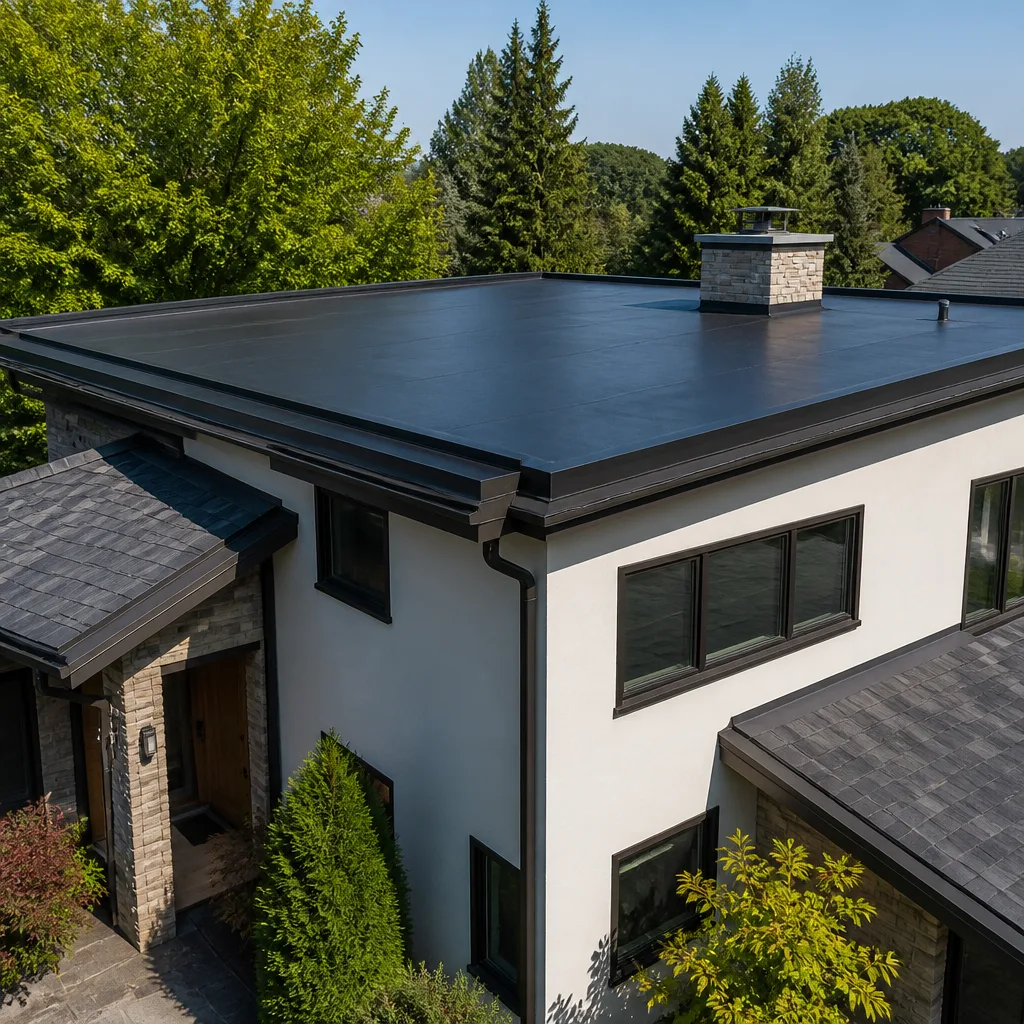 Flat & low-slope
Free roof inspection with deck photos before we talk money - GAF and Owens Corning certified installation
DIY vs Professional Roofing: The Miami Homeowner’s Decision Guide
Here’s a number that should stop you cold: a standard re-roof on a 1,500-square-foot Miami home runs between $9,000 and $16,000. Yet every year, homeowners across Miami-Dade spend long weekends on their own roofs chasing a leak that a trained eye would have found in 20 minutes. Some save a few hundred dollars. Others void their insurance, violate Florida Statute 489, and end up paying twice. This guide walks through the real math, the real code, and the real risks, so you can decide with your eyes open instead of your ladder extended. For more, see our Roofing Cost Breakdown: The Miami Homeowner’s Reference for 2026.
Styles & brands we work with
Quick Answer
For most roofing work in Miami, hiring a licensed professional is the only legal and insurable option. Small maintenance tasks like clearing a scupper or replacing one broken barrel tile on a walkable pitch are genuinely DIY-safe. Anything involving a permit, a flat roof membrane, or a repair within six feet of any roof edge is not, because Miami-Dade’s High-Velocity Hurricane Zone code requirements and your insurer’s ‘like kind and quality’ clause both demand work that a weekend DIYer cannot, by law or by skill, deliver.
Table of Contents
- What Florida Law Actually Says About DIY Roofing
- Miami-Dade’s High-Velocity Hurricane Zone: Why Local Code Is Stricter
- How Citizens Insurance Treats DIY Roof Work
- Which Small Repairs Are Genuinely DIY-Safe in Miami
- Which DIY Roof Work Is a Mistake Every Single Time
- The Hidden Costs DIY Calculators Miss
- The Three-Gate Decision Framework for Miami Homeowners
- Common Mistakes to Avoid
- When to Call a Professional
- Frequently Asked Questions
- The Bottom Line
What Florida Law Actually Says About DIY Roofing
The single most misunderstood fact about DIY roofing in Miami is that Florida law treats it as a licensing question first, not a skill question. Florida Statute 489.103(7) is the relevant carve-out. It says a homeowner may act as their own contractor on their own single-family residence without a license, provided the home is not being built or sold. That sounds like a green light. The red light comes one sentence later: the exemption does not waive the permit requirement, and if you hire anyone to help, that person must be licensed.
In practice, this means you can legally pull an owner-builder permit for a roof replacement in Miami. What you cannot do is perform that replacement to code without understanding Miami-Dade’s product approval system, its nail pattern tables, its secondary water barrier requirements, and its inspection sequencing. The county’s Building Code Compliance Office does not offer a slower lane for owner-builders. Your work gets held to the exact same standard as a licensed contractor’s.
Here’s what most YouTube tutorials miss. In Miami, the permit application itself requires you to list the specific roofing products you’ll install, and those products must appear in Miami-Dade’s Product Control Approved list. Walk into the permit office with a generic “whatever Home Depot has” answer and you’ll be sent home. The product approval system exists because Hurricane Andrew proved that substandard materials fail catastrophically. The county now requires every component, from the underlayment to the fasteners, to pass wind uplift tests. A DIYer who doesn’t know this system is not saving money. They’re building a roof that will fail the first inspection, or worse, pass a visual inspection and fail in the first Cat 3 storm.
We see this gap constantly at Crestview Roofing Co Miami home. The owner-builder exemption is a legal door, not a shortcut. Walking through it still means meeting licensed-contractor standards.
Miami-Dade’s High-Velocity Hurricane Zone: Why Local Code Is Stricter
Miami-Dade and Broward are the only Florida counties designated as a High-Velocity Hurricane Zone, or HVHZ. That designation exists for one reason: this is the highest wind-load environment in the state. The code that governs roofing here is not the Florida Building Code’s residential chapter alone. It includes Chapter 15, the HVHZ-specific roofing provisions, plus Miami-Dade’s local amendments.
What does that mean for a DIYer in practical terms?
- Fastener patterns are prescriptive, not advisory. The code spells out exact nail placement for every shingle, tile, and membrane seam. In a non-HVHZ county, a roofer might use six nails per shingle. In Miami, the nailing pattern changes with exposure category. Getting it wrong means the entire field can peel in a named storm.
- Secondary water barriers are mandatory. Miami-Dade requires a self-adhered membrane over the entire deck before the finish layer goes on. This is not optional upgrade territory. It is code. Skip it and you’ve created a roof that leaks the first time wind-driven rain gets under a shingle.
- Roof-to-wall connections must be inspected. The uplift forces in a hurricane try to lift the roof off the walls. Miami code requires verified strapping or clips at roof-to-wall connections. A DIY reroof that doesn’t address these connections leaves your home’s structural integrity untouched.
- Tile roofs require specific attachment systems. If your Miami home has a barrel tile roof, you cannot simply lay new tiles the old way. Code now requires mechanical fastening (screws or adhesive-set) for most tile profiles. The old mortar-set method is grandfathered for repairs, but new work must meet current standards.
We should be honest about what this means. A homeowner who reroofs in Miami without understanding these provisions is not doing “the same job for less.” They are doing a fundamentally different job that happens to look similar from the ground. The difference shows up in the first big wind event.
How Citizens Insurance Treats DIY Roof Work
If you carry a Citizens Insurance policy in Miami, and roughly one in five homeowners in the county does, your policy contains a clause that should reframe the entire DIY question. Most Citizens HO-3 and HO-8 policies require that repairs and replacements be performed “in like kind and quality” with the original construction, and critically, that the work comply with all applicable building codes at the time the work was performed.
The clause sounds like boilerplate. It is not. Here’s how it bites a DIYer:
Say you patch a section of your shingle roof after a minor leak. Two years later, a windstorm rips shingles off the same slope. Your adjuster inspects it. The repair you performed did not use HVHZ-compliant fastening, did not use approved products from the Miami-Dade Product Control list, and was not permitted. Citizens then denies the wind claim. Their basis is not that your patch caused the damage. Their basis is that the roof, as modified by unpermitted work, no longer complies with the policy’s requirement that the dwelling be maintained to code. The entire roof’s claim status is now compromised because of a $400 repair.
This is not a hypothetical. We have worked with homeowners who learned this the hard way after a named storm. The insurance company’s position holds up in most cases because the policy language is written exactly this broadly. It is a risk-transfer mechanism: unpermitted work becomes the homeowner’s uninsured catastrophe.
Private carriers in Florida write similar language. The industry term is the “concealment and fraud” exclusion combined with the “ordinance or law” coverage trigger. Unpermitted DIY work can void the former and prevent the latter from activating. The cleanest way to protect yourself is to keep every roofing repair permitted and documented, whether you do it yourself or hire it out.
Which Small Repairs Are Genuinely DIY-Safe in Miami
Not everything on a roof requires a white truck and a permit. Some maintenance tasks are genuinely safe for a careful homeowner. The key is understanding the boundary. Here are the three we consider legitimate DIY territory in Miami:
1. Clearing Debris from Valleys, Scuppers, and Drains
Miami’s oak trees, mango trees, and palm fronds drop organic material onto roofs all year. When that material clogs a valley or a flat-roof drain, water backs up and finds a way in. Clearing it is low-risk, requires no permit, and can prevent a real leak. You need a ladder, gloves, and a garden hose. Do this every three to four months, and especially after heavy storms.
2. Replacing a Single Broken Tile on a Walkable Pitch
Barrel tile roofs are common across Miami’s older neighborhoods, from Coral Way to Kendall. Tiles occasionally crack from impact or thermal stress. If the broken tile is on a shallow, walkable section of roof, on the lower portion of the slope, away from the ridge and edges, a homeowner can replace it. The process involves lifting adjacent tiles, removing the broken one, setting a matching replacement, and securing it according to the tile manufacturer’s profile. No permit is required for a like-for-like single tile replacement. If you cannot visually match the tile profile, or if you have to walk on the tile itself rather than the deck, stop and call a pro.
3. Cleaning Gutters Where Access Is Ground-Level
Clogged gutters in Miami lead to overflow at the fascia, which leads to rotted wood and entry points for dampwood termites, a real issue in our tropical climate. If your gutters are reachable from a step ladder on level ground, cleaning them is safe DIY work. If the gutters run along a second story, and particularly if you have a tile roof with fragile edges, the risk shifts. Ladder work on a two-story Miami home in afternoon rain-slick conditions is not the place to save a service call.
For anything beyond these three tasks, we recommend at minimum a professional roof inspection before you touch a tool. The line between safe DIY and costly mistake in Miami is narrower than in most cities because the code and the insurance stakes are higher.
Which DIY Roof Work Is a Mistake Every Single Time
Some roof work is never safe for a homeowner. Not “rarely safe.” Not “safe with enough YouTube.” Safe never. Here is the list, and the reasons are specific to Miami:
- Any flat roof membrane work. Flat roofs make up a large share of Miami’s mid-century homes and commercial conversions. Mod-bit, TPO, and PVC membranes require heat welding, specialized adhesives, and proper seam overlap. A bad seam on a flat roof leaks in the first week. And because flat roofs pond water in Miami’s summer thunderstorms, a bad repair becomes a structural problem fast.
- Any work within six feet of the roof edge. Roof edge detailing, drip edge replacement, and perimeter fastening are the most wind-vulnerable parts of the roof. They are also where falls happen. Miami-Dade code has specific edge metal requirements to resist uplift. Even if you do the work correctly by some standard, an unpermitted edge repair is a red flag for insurance adjusters.
- Skylight, chimney, or vent flashing replacement. Flashing, the metal strips that seal joints around penetrations, is the single most common source of roof leaks in Miami. Replacing it correctly requires removing surrounding roofing material, installing the flashing in the proper sequence, and re-laying the roof so water sheds correctly. Get the sequence wrong and you’ve created a leak where none existed.
- Any work requiring a permit. In Miami-Dade, a full reroof always requires a permit. A repair that exceeds 25% of the total roof area in any 12-month period also requires a permit. If you cannot name which of these thresholds your project crosses, you should not be on the roof.
- Any work on a steep-pitch or two-story roof. Falls from roofs are a leading cause of construction deaths in Florida. A steep-pitch tile roof combined with Miami’s afternoon rain showers creates a slick, sloped surface with no room for error. We consider this a no-go for anyone who is not trained and harnessed.
We say this not to be dramatic, but because we have been called to fix DIY attempts in every neighborhood from Westchester to North Miami. The common thread is never a lack of intelligence. It’s a misjudgment of the roof as a simple surface instead of a system. Roofing is a system, and in Miami’s wind environment, the system’s tolerances are tighter than anywhere else in the country.
The Hidden Costs DIY Calculators Miss
The typical DIY calculator compares material cost to contractor quote and declares a savings of 40% to 60%. The calculators are not lying. They are just not telling you everything. Here is what they miss, based on what we see at rescue calls across Miami-Dade:
1. The Permit Fee and Document Preparation
A Miami-Dade roofing permit for a residential reroof costs several hundred dollars, depending on square footage. But the bigger cost is time. The permit application requires a site plan, product specifications, and in many cases a Notice of Acceptance for each product. First-time owner-builders routinely spend two to three full days navigating the county’s online permitting portal and plan review process. At any reasonable hourly rate, that time is money.
2. Rental Equipment
Dump trailers, roofing nailers, shingle lifts, membrane rollers, and heat welders for flat roofs all cost daily rental fees. A full reroof generates 3 to 5 tons of waste. The dump trailer alone can run $200 to $400 a day, and most DIY reroofs take 4 to 7 days, not the 2 a YouTube video suggests.
3. Waste Disposal Fees
Miami-Dade’s waste transfer stations charge by weight, and roofing debris is heavy. A 20-square roof tear-off produces roughly 5,000 pounds of material. County disposal fees plus the fuel and time to make multiple runs add up to real money. Professional roofers build disposal into their per-square price. DIY calculators often omit it entirely.
4. The Fail-and-Redo Cost
This is the big one. When a DIY installation does not pass Miami-Dade inspection, the fix may not be a simple correction. We have seen owner-builder roofs fail inspection for improper nail patterns, and the “fix” required removing every shingle and starting over. The cost of disposing the botched material and starting fresh often erases the entire contemplated savings. Add the cost of a professional reroof on top of the material you already bought, and you are often 20% to 30% worse off than if you had hired a pro from the start.
Dylan Pace puts it this way: the most expensive roof in Miami is the one that has to be torn off twice.
The Three-Gate Decision Framework for Miami Homeowners
Instead of asking “can I do this?” ask three sequential questions. If the answer to any gate is “no,” the decision is made. No amount of skill or confidence overrides a gate failure.
Gate 1: Is It Legal for Me to Do This?
This gate is not about skill. It is about Florida Statute 489 and Miami-Dade code. Ask:
- Does this project require a permit?
- Does this project involve any product that must appear on the Miami-Dade Product Control Approved list?
- Will this project exceed 25% of my roof area in any 12-month period?
- Am I hiring anyone to help, even a day laborer, without a license?
If you cannot answer these with certainty, gate failure. Call a licensed contractor.
Gate 2: What Happens to My Insurance If the Work Fails?
Read your policy, or call your agent. Specifically ask:
- Does my policy contain a “like kind and quality” clause? (Most do.)
- Does my policy require that all repairs comply with current building code?
- Will unpermitted roof work void coverage on future wind claims?
Citizens policyholders should assume the answer to the third question is yes. Private carriers vary, but none write policies designed to protect DIY work. If your agent cannot confirm in writing that a specific repair won’t affect future claims, treat that uncertainty as a gate failure.
Gate 3: Do I Actually Have the Skill, and More Important, the Margin for Error?
This is the gate most people start with, and it is the least important of the three. But it still matters. Ask:
- Have I done this exact task before on a roof of this pitch and material?
- Do I understand the fastener pattern, the underlayment sequence, and the edge detail requirements for HVHZ?
- If I get halfway through and discover something unexpected, do I know what I’m looking at?
- Can I afford to redo the work if it fails inspection?
If any answer is no, gate failure. And even if all three are yes, the first two gates still control. In Miami, skill without legality and insurance clarity is just a faster way to lose money.
Common Mistakes to Avoid
- Confusing the owner-builder exemption with a permit exemption. Florida law lets you act as your own contractor. It does not let you skip permits. Unpermitted work is the fastest way to void your insurance coverage and create a disclosure problem when you sell.
- Using non-HVHZ-approved materials. That bargain shingle bundle may not appear on Miami-Dade’s Product Control list. If it doesn’t, your installation is non-compliant even if the workmanship is perfect.
- Trusting YouTube tutorials made for other states. A roofing video filmed in Texas or Ohio is teaching a different code. Nail patterns, underlayment, and edge details that pass inspection in Dallas will not pass in Miami-Dade.
- Skipping the permit to save $400. The permit fee is the cheapest insurance you can buy on a roof job. Skipping it to save money is like canceling your car insurance to save on premiums and then hitting a parked car.
- Repairing a flat roof with a patch kit. Peel-and-stick patches on a Miami flat roof last about as long as a paper umbrella in a summer thunderstorm. What’s worse, the failed patch hides the real problem and creates a new leak path.
- Working on a roof alone. If you fall, and falls are the most common roofing injury in Florida, there is no one to call 911. Never do roof work alone, even for “just a quick look.”
When to Call a Professional
Call a licensed roofer when the work requires a permit, touches a roof edge or penetration, involves a flat roof membrane, or exceeds a single broken tile on a walkable pitch. Also call when your insurance carrier has told you about an upcoming policy renewal that may require a roof certification, when you are planning to sell, or when you simply don’t want to climb a ladder in Miami’s summer heat. Roofing is not a hobby, and in this wind environment, the margin for error is thinner than in any other major U.S. city.
Roof Repair in Miami and Roof Replacement in Miami are the two most common calls we get, and the two projects where DIY failure is most expensive. If you are considering a full replacement, start with a Roof Installation in Miami estimate, not a ladder. Crestview Roofing Co Miami offers free estimates across Miami, and the written price means the number on the page is the number on the invoice. Call (850) 318-3769.
Frequently Asked Questions
Yes. A full roof replacement in Miami-Dade always requires a permit, even if you use the owner-builder exemption to pull it yourself. The permit ensures your roof meets HVHZ code, which is the same standard a licensed contractor must meet. The exemption lets you act as your own contractor, but it does not waive the permit requirement. Call (850) 318-3769 if you’d like help understanding what your specific project requires.
It can. Citizens policies typically require repairs to be made “in like kind and quality” and to comply with current building code. Unpermitted DIY work that doesn’t meet Miami-Dade’s HVHZ standards can give Citizens grounds to deny a future wind-damage claim, even if the damage is unrelated to your repair. Before doing any DIY roof work, call your agent and ask them to confirm in writing how your specific work will affect future claims.
Clearing debris from gutters and roof drains, cleaning ground-level gutters, and replacing a single broken tile on a walkable, shallow-pitch section of roof are the tasks most people can safely handle. Any work that requires a permit, any flat roof membrane work, and any work within six feet of a roof edge should be left to a licensed professional.
This varies, but the pattern is consistent. A homeowner who spends $400 on materials for an unpermitted flat roof patch and then has the work re-done properly typically ends up spending $1,500 to $3,000 total, effectively paying for the job twice plus disposal of the botched repair. A failed DIY that compromises a future insurance claim can cost far more, in the range of a full deductible or a denied claim.
Yes. Florida law requires any person performing roofing work for compensation to hold an active contractor’s license. Hiring an unlicensed handyman exposes you to liability if someone is injured, and the work will be unpermitted, which creates the same insurance problems as doing it yourself. A licensed contractor’s license number should be verifiable through the Florida DBPR website.
Ask for their Florida contractor license number and verify it through the Florida Department of Business and Professional Regulation. Confirm they carry general liability and workers’ compensation insurance. And ask whether they handle permits and inspections themselves, every honest roofer in Miami does. Any roofer who suggests skipping the permit is telling you everything you need to know. Call (850) 318-3769 for a free estimate from a roofer who puts the price in writing before any work starts.
The Bottom Line
The DIY roofing question in Miami is not really about whether you can swing a hammer. It is about whether the money you save today is worth the legal, insurance, and safety risk you carry into the next hurricane season. In most cases, it is not. The tasks that are safe to DIY are small, clearly defined, and low-stakes. Everything else, and especially anything requiring a permit or touching a flat roof or a roof edge, belongs with a licensed contractor who understands Miami-Dade’s code and carries the insurance to back up the work. The cheapest roof is the one you never have to think about twice. Explore more guides & resources to protect your home.
Written by Dylan Pace, Owner at Crestview Roofing Co Miami, serving Miami since 2000.
See the difference
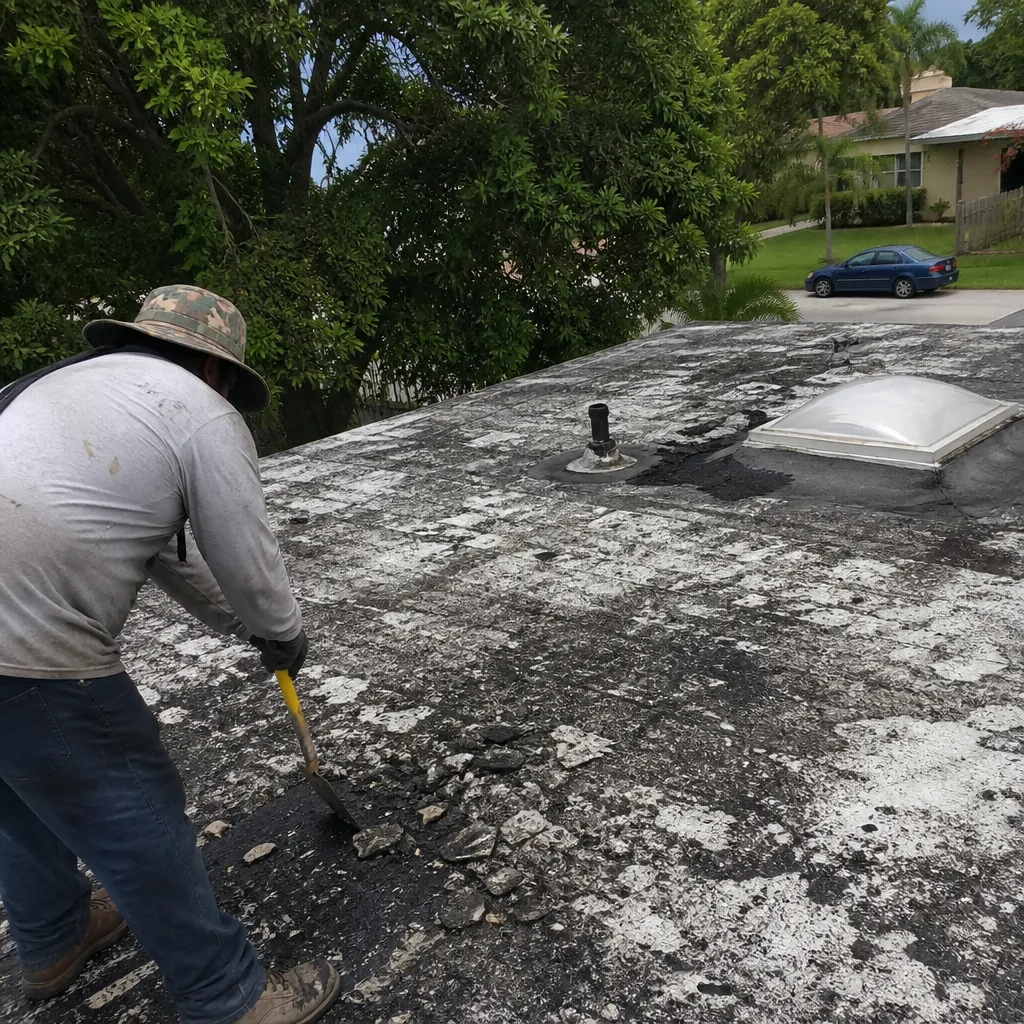 Before
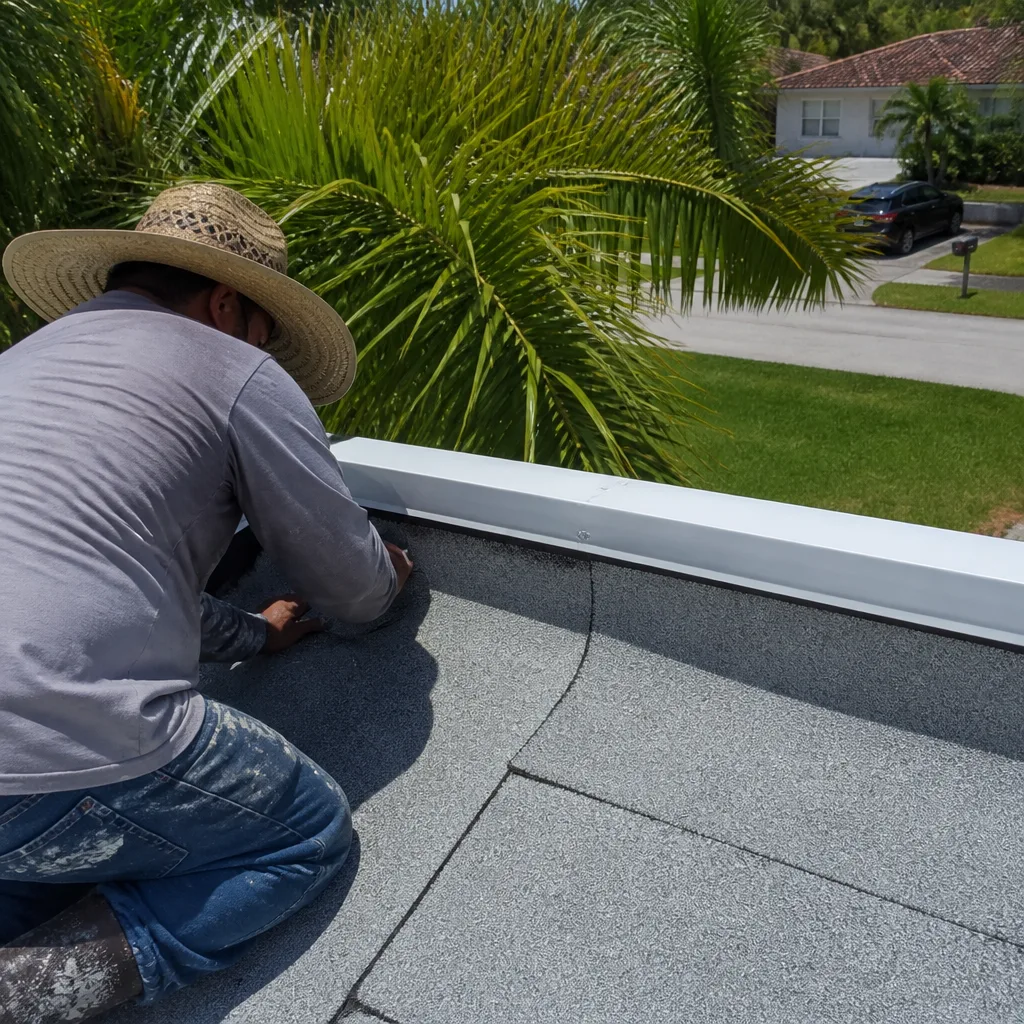 After
After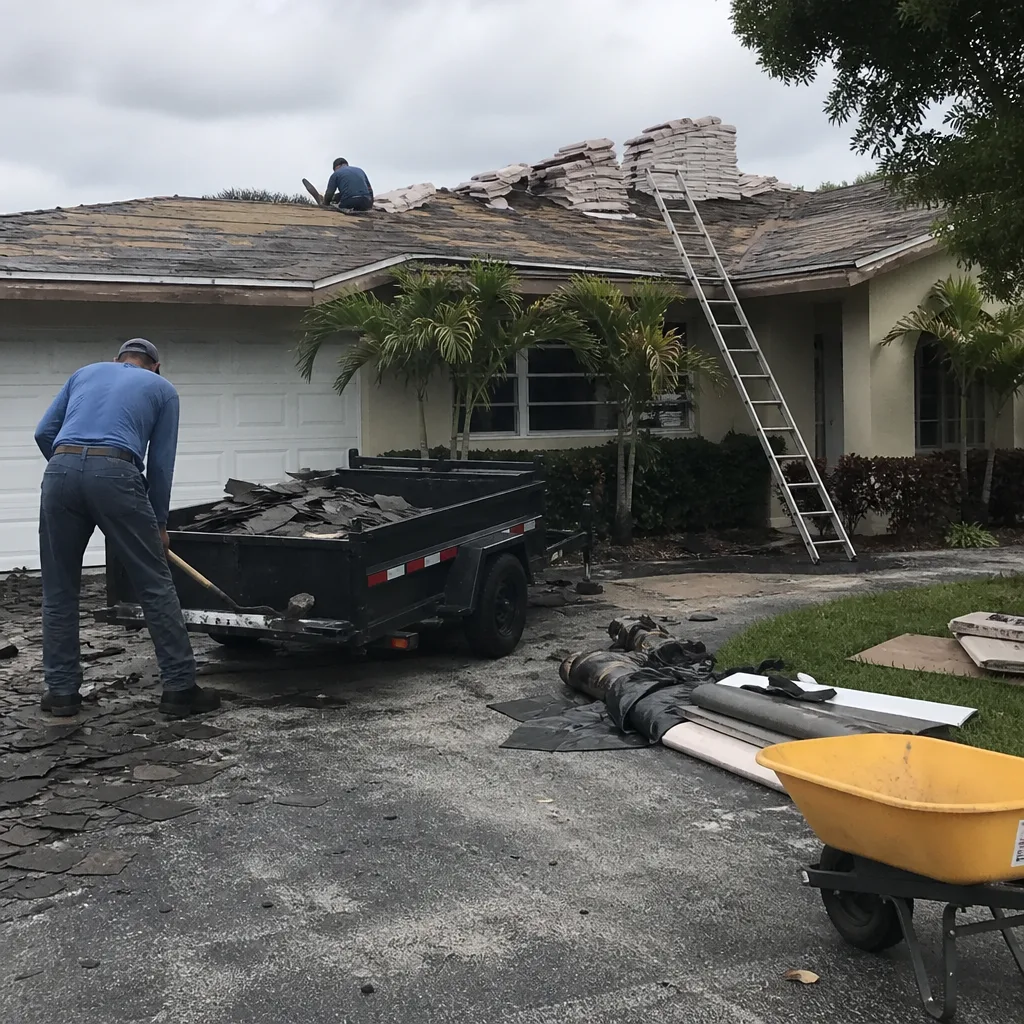 Before
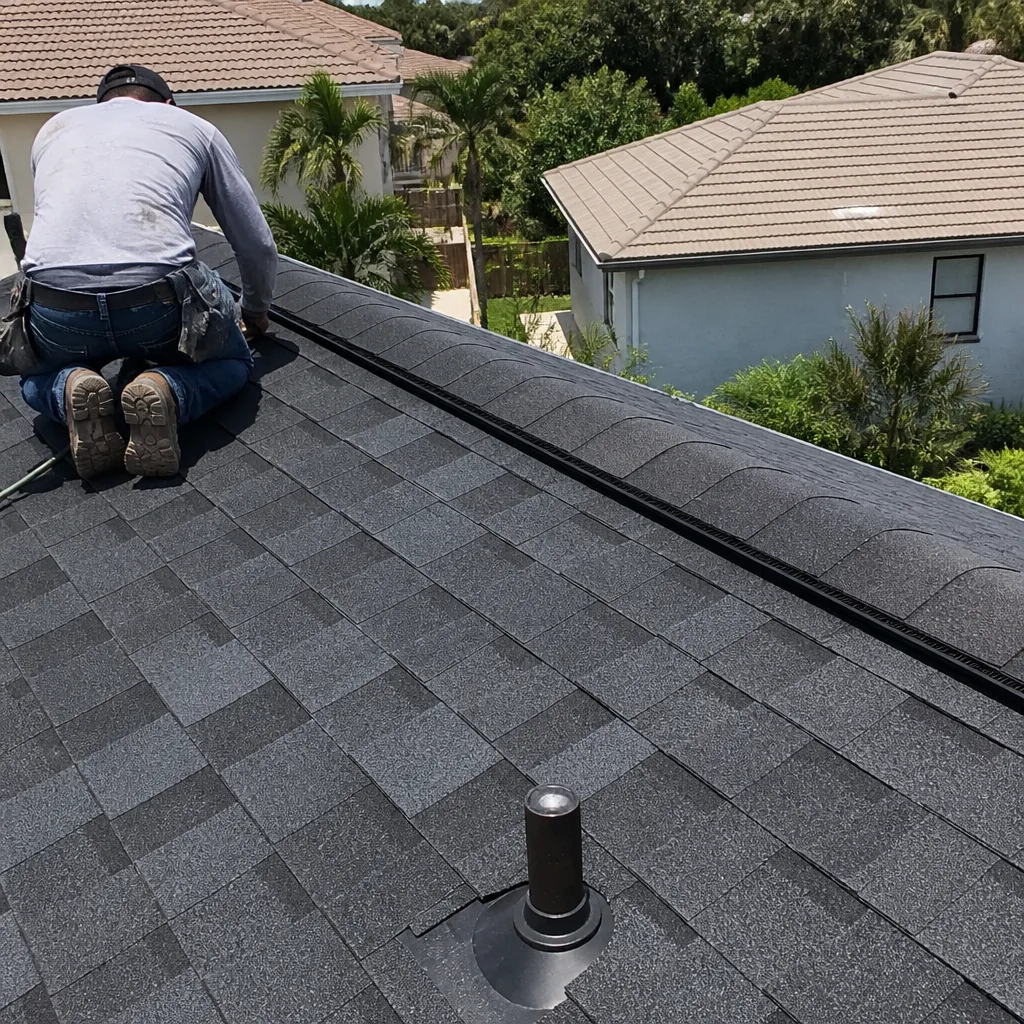 After
After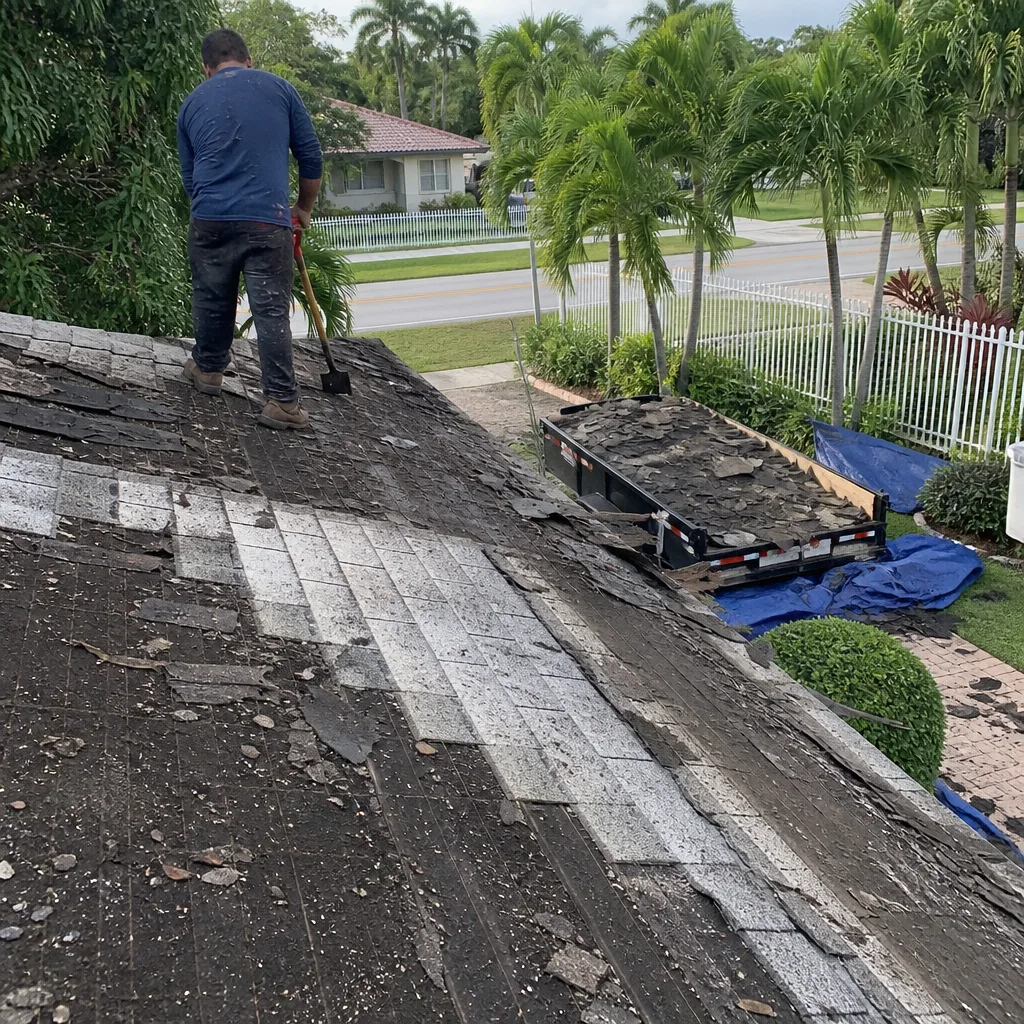 Before
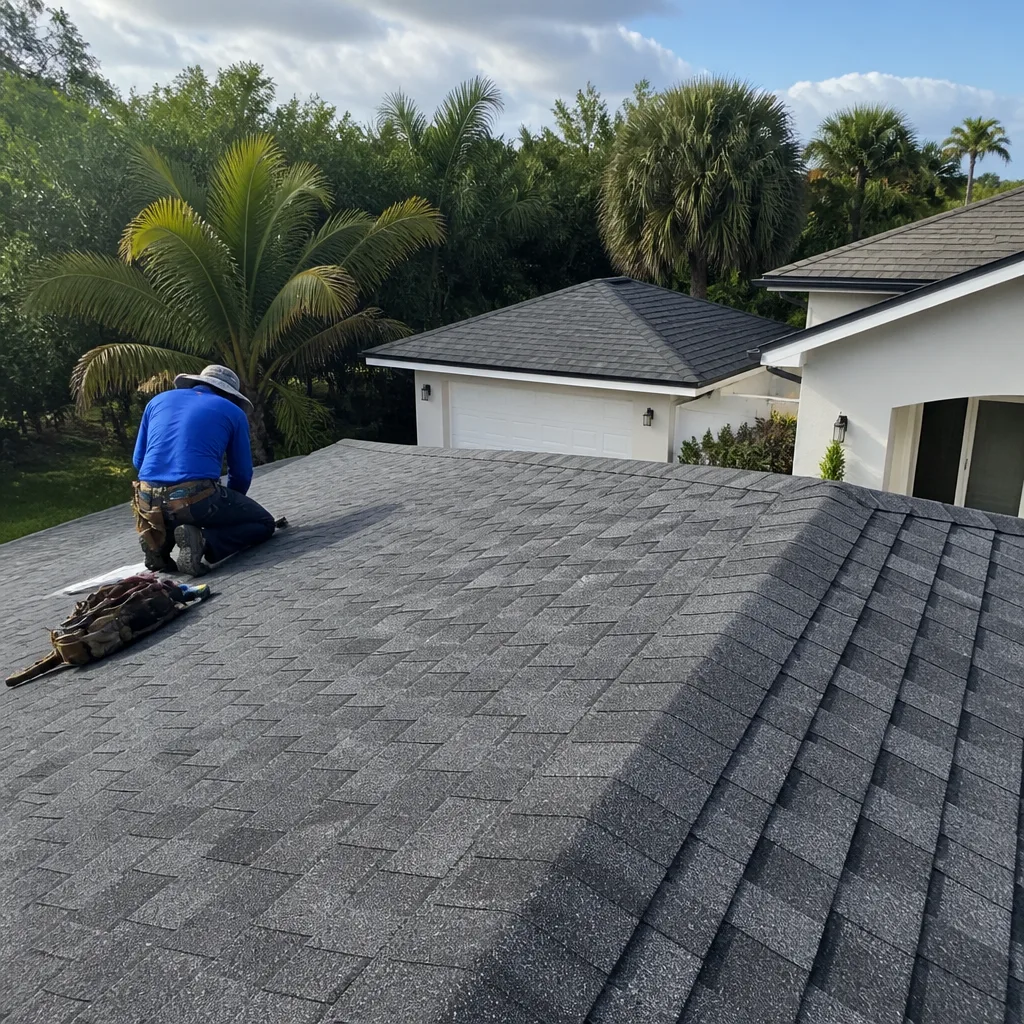 After
After